
A Seat at the Table: Okinawa
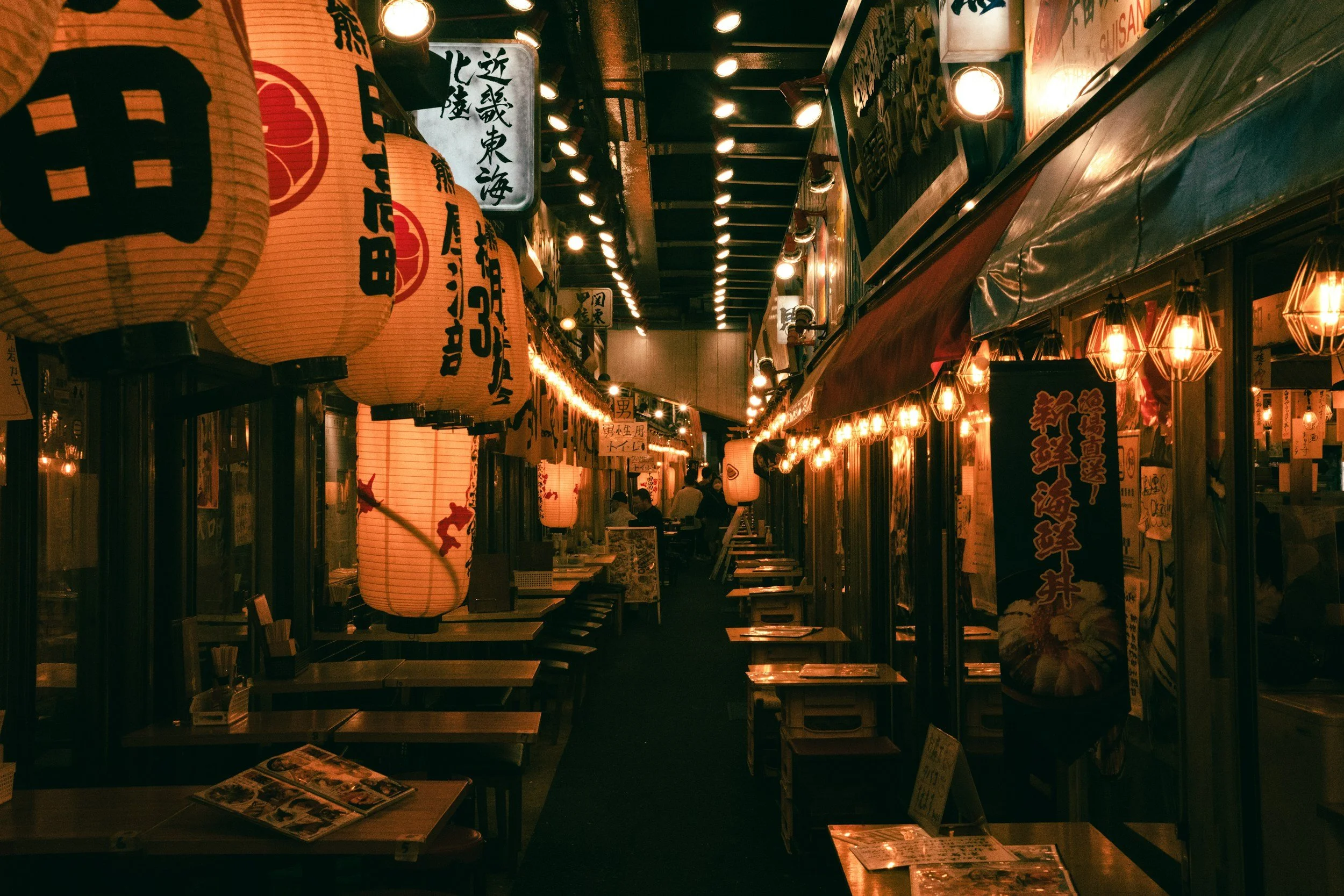
An izakaya at night
When I first moved to Okinawa, I thought I understood Japanese food. I knew ramen, sushi, tempura, and soba. I assumed Okinawa would simply be a tropical version of the same thing.
I was wrong.
The longer I live here, the more I realize that some of the best insights into Okinawan culture don't come from museums or landmarks. They come from sitting down for a meal.
Some of my favorite evenings have started without much of a plan. A drive along the coast turns into a stop at a small local restaurant. A recommendation from a friend leads to a place I never would have found on my own. Before long, I'm sitting beneath warm lights with dishes spread across the table, sharing a meal that tells me more about Okinawa than any guidebook ever could.
That's what inspired this series.
Welcome to A Seat at the Table — a series exploring destinations through the meals that shape them. Not the polished restaurant lists or trendy reservation spots, but the dishes woven into daily life. The recipes that carry history. The tables where conversation lingers long after the plates are cleared.
Our first stop: Okinawa.
The best thing you can do while traveling is allow yourself to get lost.
In Okinawa, getting lost often leads you into a tiny neighborhood izakaya tucked beneath faded signage and sea-worn walls, where the air smells faintly of grilled pork, awamori, and salt carried in from the ocean. The menu may not have English translations. Someone at the next table may pour you a drink anyway.
And suddenly, you are no longer observing the culture from a distance. You are sitting inside it.
Nuchigusui: Food as Medicine
One of the first things I learned here is the concept of nuchigusui, often translated as "food as medicine." Long before Okinawa became known globally as a “Blue Zone,” locals embraced the philosophy of nuchigusui.
At first, it sounds like a wellness trend. But living in Okinawa, I've come to understand it differently. It isn't about counting ingredients or following rules. It's about the belief that food nourishes more than the body. It brings people together. It preserves traditions. It creates moments worth lingering over.
The food reflects Okinawa’s history as the former Ryukyu Kingdom, shaped by trade with China, Southeast Asia, and mainland Japan while still maintaining an identity entirely its own. Isolation, subtropical weather, and resilience all show up at the table.
Where much of mainland Japanese cuisine leans delicate and seasonal, Okinawan food feels grounded and hearty — slow-braised meats, earthy vegetables, fermented ingredients, and bold flavors designed for long summers and long conversations.
The Essential Plates
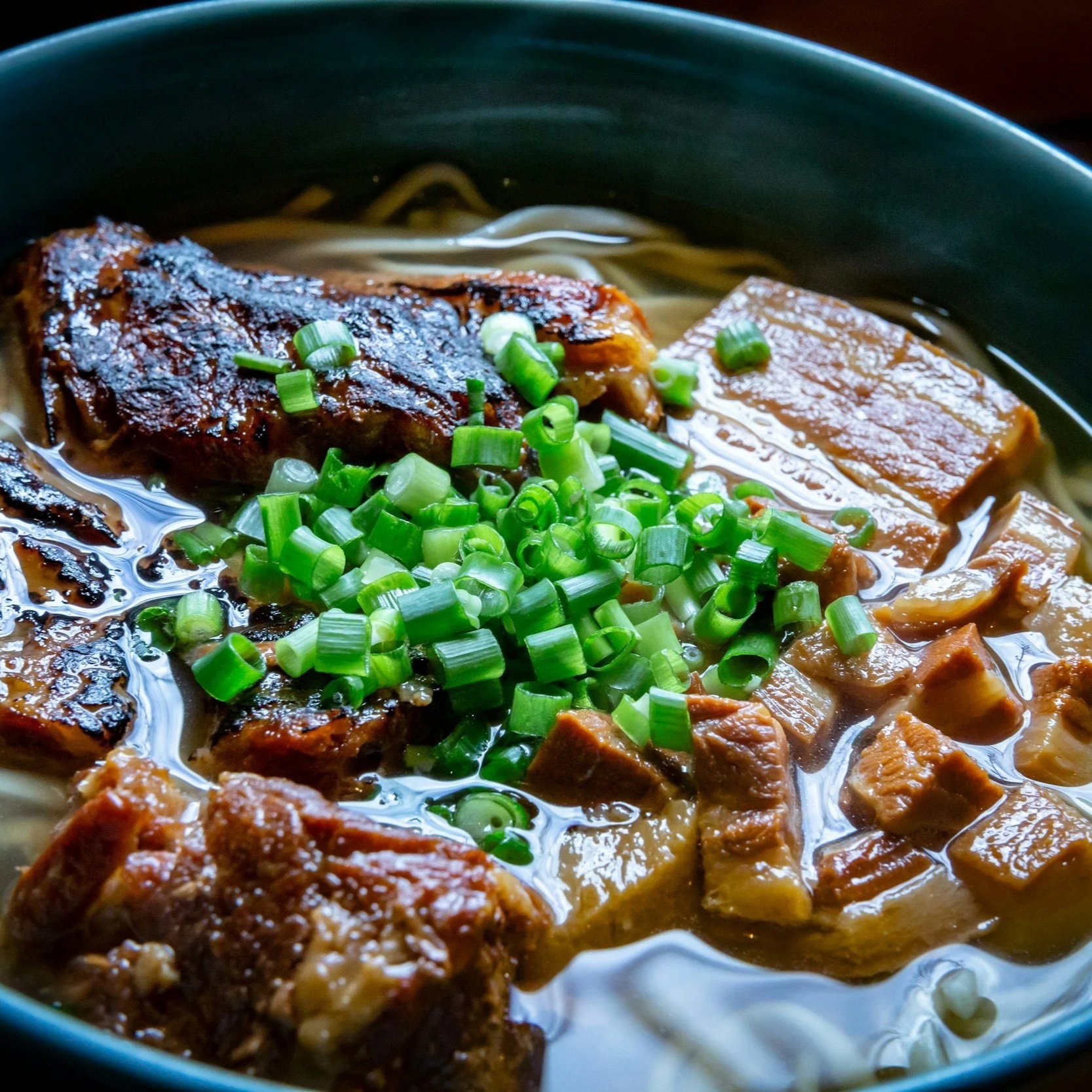
To understand Okinawa, start with what is served when life slows down. Okinawa soba is a dish rooted in tradition, bringing together local ingredients, generations of recipes, and the comfort of gathering around a shared table.
If you find yourself pulling up a chair in Okinawa, start here.
Goya chanpuru was one of the first dishes I tried. I'll admit it wasn't love at first bite. The bitterness of goya catches most newcomers by surprise. But somewhere along the way, it became one of the dishes I find myself ordering again and again. It tastes like Okinawa itself — bold, unfussy, and impossible to confuse with anywhere else.
Then there's Okinawa soba, a comfort food I never get tired of. Despite the name, these noodles are entirely different from the buckwheat soba found on mainland Japan. Thick noodles, rich broth, tender pork, and the kind of simplicity that somehow feels exactly right whether it's a rainy afternoon or a sunny day near the coast.
Rafute is another favorite. Slow-braised pork belly that practically falls apart when you pick it up. Rich, savory, and unmistakably Okinawan. Rafute feels less like a meal and more like something passed down carefully through generations.
And then there are the foods that remind you you're surrounded by the sea. Umi budo, often called sea grapes, arrive looking almost too delicate to eat. One bite and they burst with a fresh, salty flavor that tastes like the islands themselves.
The Spirit in the Glass
No Okinawan table is complete without awamori.
I've shared glasses of it at neighborhood restaurants, celebrations, and dinners that somehow stretched hours longer than anyone planned. It usually starts with a quick toast and ends with stories being exchanged across the table long after the food is gone.
Like much of Okinawan culture, awamori isn't something to rush. Distilled from rice and produced on the islands for centuries, it's traditionally served over ice or mixed with water, meant to be sipped slowly while conversations unfold around it.
And maybe that's the real lesson I've learned from living in Okinawa. Very little here feels hurried. Meals last longer. Conversations wander. Another dish appears in the middle of the table. Someone orders one more round. Nobody seems particularly concerned with what time it is.
To experience Okinawa through its cuisine is to understand that food is never just food. It's memory. Community. Tradition passed from one generation to the next. Every meal tells part of the story of these islands—the influences they've welcomed, the hardships they've endured, and the culture they've fiercely preserved along the way.
So pull up a chair.
Order something unfamiliar.
Stay a little longer than you planned.
That's what I hope this series captures—not just what people eat, but what those meals reveal about the destinations we think we know.
